A blog on Antwerp's Cathedral of Our Lady and it's history.
In this article
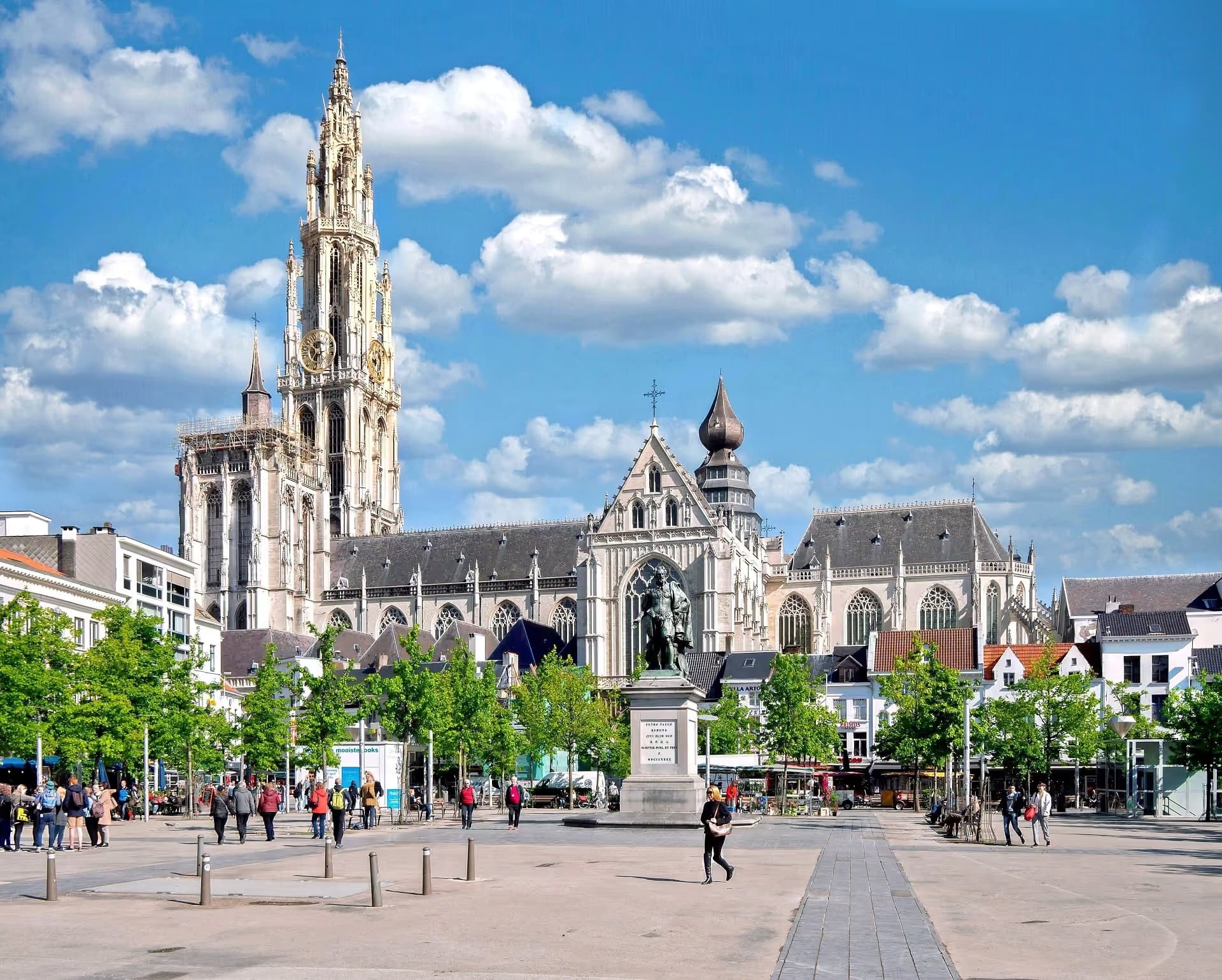
When you choose coliving in Antwerp with HOC Living, you become part of a community that gets to discover the city together. Sooner or later, that journey leads to the Cathedral of Our Lady. With its soaring spire, Gothic details and place in the historic heart of the city, it is hard to miss. Inside, you will find works by Rubens; in season, you can even climb the tower with a guide. The cathedral is more than a building to admire from the outside: it has been a gathering place for Antwerp for centuries.
(photo: with permission of Music Museum Vleeshuis)
A building project that took almost two centuries
The present cathedral was built between 1352 and 1521. This was no small renovation that simply ran over schedule: generations of Antwerp residents watched the church take shape. It stands on the site of an older church and chapel, and grew alongside a city that became ever wealthier and more important in the late Middle Ages.
The northern tower rises 123 metres and is one of Antwerp’s best-known landmarks. The southern tower was meant to be just as impressive, but it remained much lower and unfinished. And yes, the story that the money ran out is true: in 1475, work on that tower was halted because of a shortage of funds. Later, there were even plans to extend the church further south; after the fire of 1533, the available money went towards repairs. So the cathedral never got its symmetrical pair of towers, but it did get a silhouette you can recognise straight away. And honestly, on a cloudy day, that one tower still helps us know where we are.
In the Middle Ages, the church was not the quiet, empty space we might imagine. The Church of Our Lady had dozens of altars and chapels, often connected to a guild, trade or religious brotherhood. Masses were held constantly. People came to pray, meet one another and visit their favourite saint. There were no neat rows of chairs for everyone; at most, there were benches beside some altars. So people could walk around, talk and move from one altar to the next. The transept was even used as a passageway. A lively place, in short — though a modern churchgoer might need a moment to get used to the buzz.
There was plenty to buy, too: candles, sacramental wine and altar bread. An ivory carver who made prayer beads probably also carved dice on the sly. Less devotional, perhaps, but handy after Mass. Ball games sometimes sent balls into the stained-glass windows; if there was no money to repair them straight away, the holes were temporarily patched with reeds. In 1533, a candle set those reeds alight and a large part of the church burned down. An unfortunate combination of candlelight and sport.
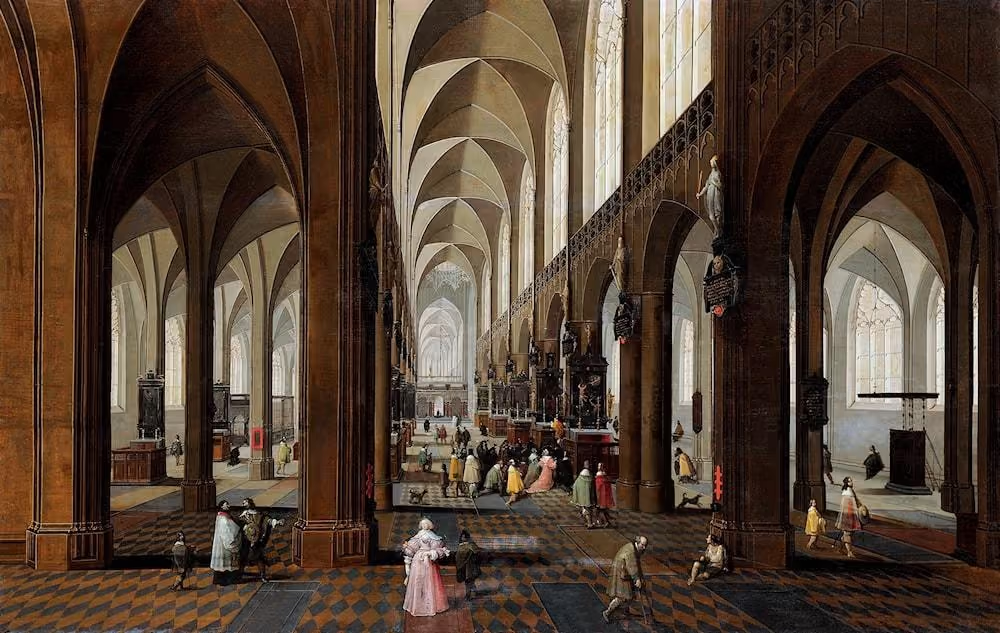
And animals? Accounts of church life in the 16th century mention stray cats and livestock traders, too. The cathedral was clearly a busy part of everyday life. I have not found solid evidence that chickens and goats actually wandered between the altars in Antwerp — perhaps that detail has blown in from another medieval story.
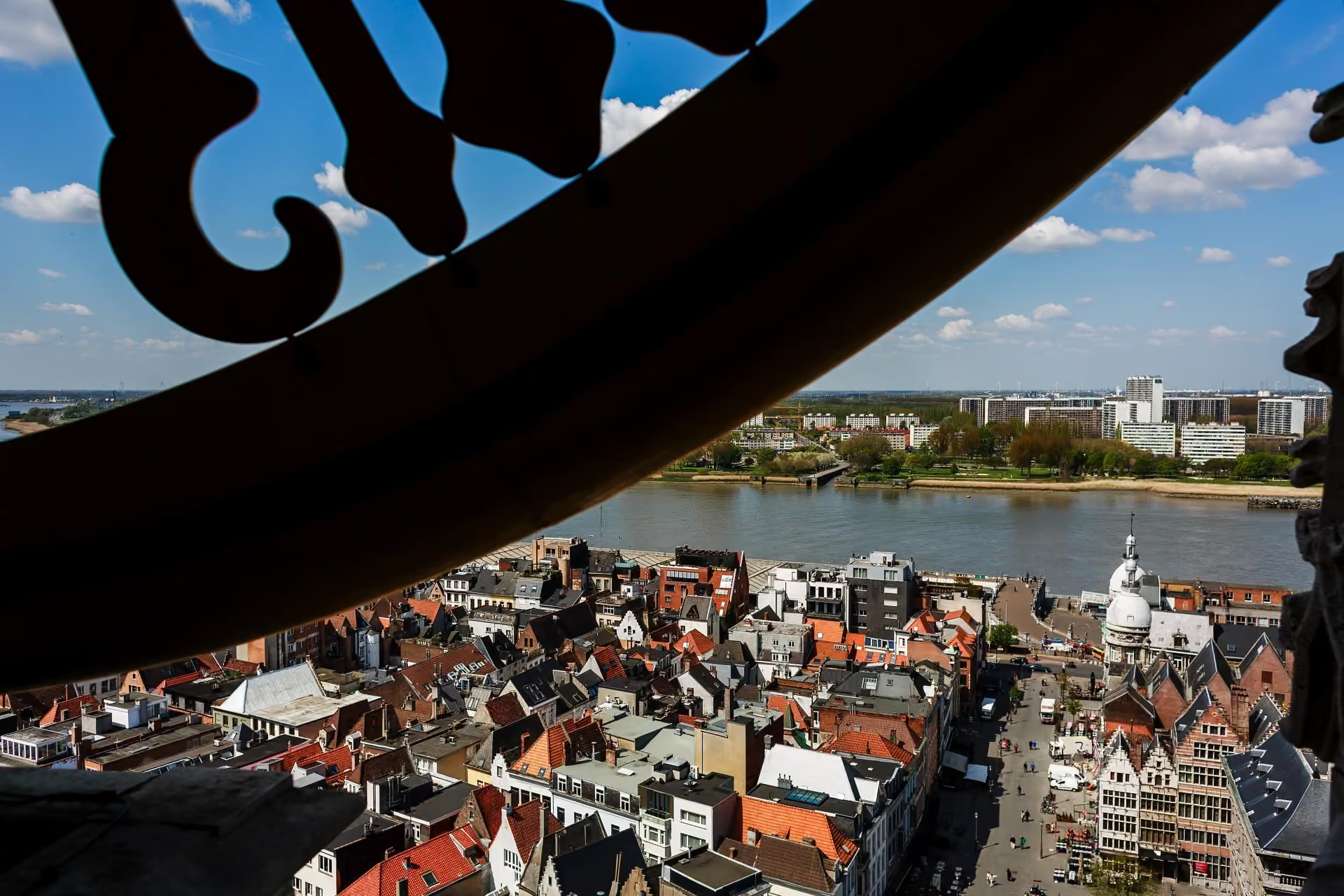
From April through October, you can climb the cathedral tower with a guide. The tour takes you past the bells and the carillon, and after 515 steps rewards you with an impressive view over Antwerp. On a clear day, the panorama reaches a long way. It is a demanding climb, but well worth it: along the way, you get a close look at the tower and a completely different view of the city. Booking is required; tour dates and tickets are released in stages by the Vleeshuis Music Museum.
A small fact to keep in mind as you climb: this is not only a church tower, but also a belfry closely linked to the city and its administration. For centuries, its bells marked the rhythm of daily life. This solemn-looking building had a practical agenda, too: telling the time, sounding the alarm and letting the city know what was happening.
Inside, the cathedral is a world of its own: soaring vaults, stained-glass light and art that draws your eye in every direction. Two famous works by Peter Paul Rubens, The Elevation of the Cross and The Descent from the Cross, are among the crowd favourites. You do not need to be an art historian to see that these paintings were made to make an impression. They take up space, in every sense.
And yet there is something homely about the place, too. People light a candle, look around for a moment or take shelter while the city rushes on outside. The cathedral is monumental, but it is not only for monumental occasions.
The streets around the cathedral hold a surprising past, too. Groenplaats, Handschoenmarkt and several nearby streets were once part of the cemetery of the Church of Our Lady. Groenplaats was first known as the Great Cemetery and later as the Green Cemetery; its name today recalls that former burial ground, rather than a park that has always been there.
And Handschoenmarkt? Its name comes from the furriers and glove makers who set up stalls there during markets and fairs. The church chapter rented out church land to market traders. The name came into use in the first half of the 17th century; earlier, this spot was known as the Little or Stone Cemetery. So people were already shopping there centuries ago — though the range was a little heavier on gloves and fur, with graves for neighbours.
Your memory of Napoleon was close, with one small historical footnote: it was Emperor Joseph II who banned burials within the city in 1784. Napoleon confirmed the ban in 1804. By then, the Green Cemetery had already closed and was becoming a square. Napoleon ordered the buildings on the southern side to be demolished and had lime trees planted; for a while, the square was even called Place Bonaparte. So yes, Napoleon does make an appearance — and even got a square named after him. Today, you can have a drink on a terrace without suspecting you are sitting in the middle of a former cemetery.
For residents enjoying coliving in Antwerp, the cathedral is an obvious place to explore together. Start at Handschoenmarkt, take your time inside and then walk on to Groenplaats. Or book the tower climb and see the city from above — a good excuse to bring housemates, friends or visiting family along.
At HOC Living, we value Antwerp as a city where heritage and everyday life sit side by side. The cathedral captures that beautifully: it is an artwork, a city landmark, a meeting place and a quiet witness to centuries of change. And when you come back down after 515 steps, you are sure to see the city a little differently. Your calves probably will, too.
Next article
HOC outgrew its name. What started as a single coliving house in Antwerp grew into a community of over 60 residents from 43 countries, a coworking brand, and a whole way of living. The name is new. Everything else is the same.
Continue reading