Community living in Antwerp works when a house gives people reasons to cross paths, and events are those reasons. Two events a month across thirteen HOC houses (a paella, an escape room, a murder mystery, a weekend in the Ardennes) taught us what builds belonging: small groups, a shared task, a table, and housemates from different streets.
In this article
Community living in Antwerp starts with an awkward fact: where you sleep decides whom you meet. In a coliving house that means a door on your corridor, a kitchen you share, a neighbour you nod to on the stairs; for a young professional or an expat new to the city, that is the whole network, until something widens it. Coliving events are what widen it.
At HOC we run thirteen houses across the city, and no two have quite the same rhythm. That is a gift to the person choosing a house. For the person trying to belong, it is a problem: a house can be warm and still be an island.
So we built a calendar. Two events a month are its backbone: a paella at Garden House, an escape room, a murder mystery in our Work of Co office, a weekend in the Ardennes. Some worked better than others. This is what we learned about which ones turn housemates into friends, and what we changed when they didn't.
In the Westgate studies at MIT, published in 1950, Festinger, Schachter and Back mapped friendships across a housing complex and found that proximity did most of the work. Residents whose flats sat near a stairway ended up with more friends on other floors, simply because more people walked past their door. Psychologists call it propinquity. Everyone else calls it luck.
Coliving inherits the finding, and its limit. You will know the people in your corridor within a week. The tenant two streets away, in a different house with a different garden, might as well live in another city. Nothing in the floor plan will introduce you.
Émile Durkheim had a name for what does the introducing. In 1912 he described collective effervescence: the surge of energy and unity that rises when a group gathers and acts in unison. A community, on his account, is not something you are handed. It happens when people do something together, at the same time, in the same room.
That is the job of an event. Not entertainment; infrastructure. And like any infrastructure, it only works when it runs on a rhythm, which is why we keep returning to the role of ritual in belonging.
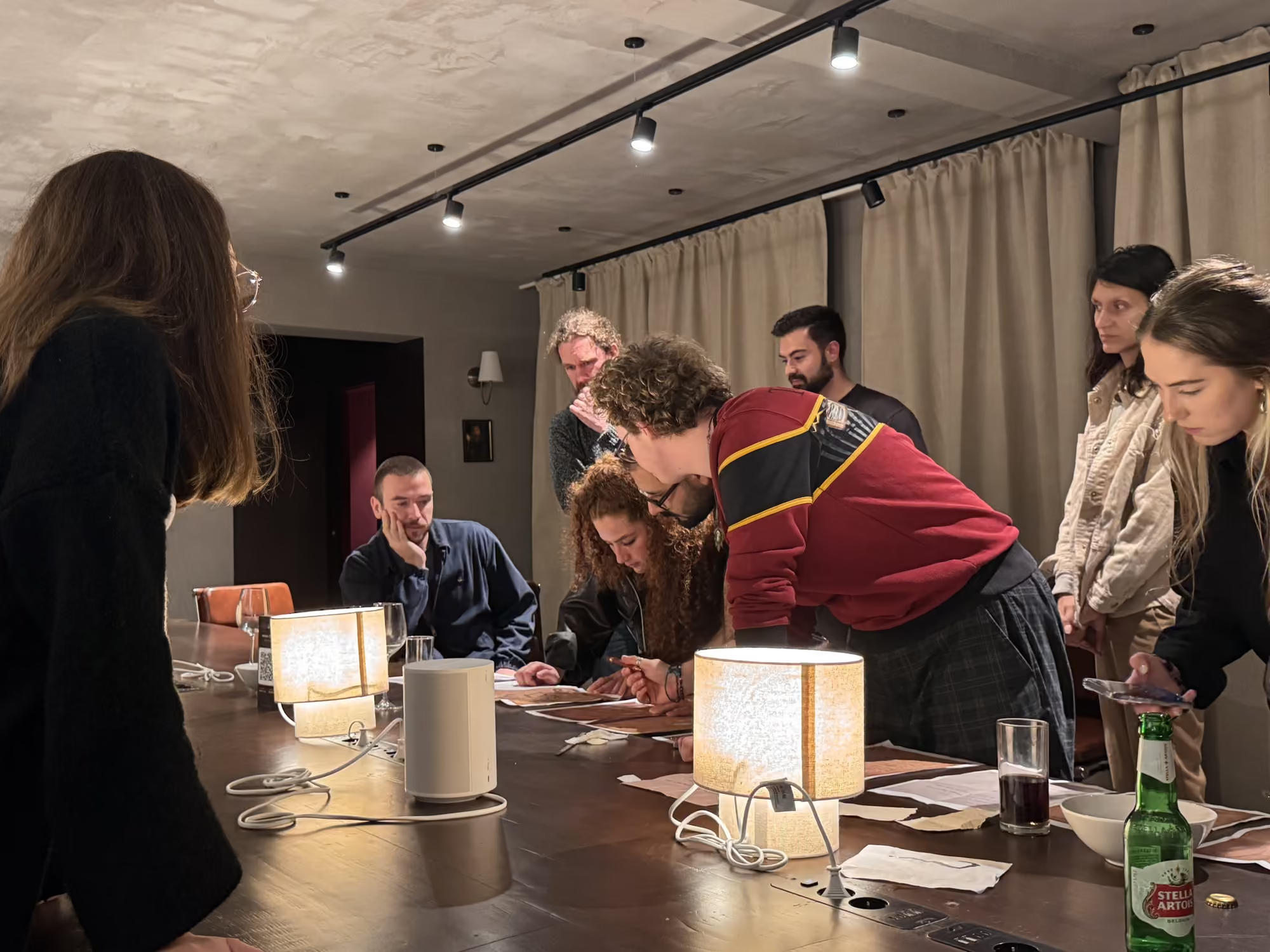
Community living in Antwerp gets built through repetition, not one big welcome party. At HOC that means two events a month across thirteen houses, a WhatsApp poll for each one, and a personal invitation for every new tenant, so that showing up becomes a habit and a first evening never has to be faced alone.
The machinery is plain, and we would rather you see it. On the last Monday of each month the team picks the next month's two events and names an owner for each. The calendar goes up in the residents' WhatsApp channel mid-month; every event then gets its own poll, a Monday reminder and a printed graphic for the shared spaces. New tenants receive a personal message with a direct invitation, because a poll is easy to ignore and a name is not.
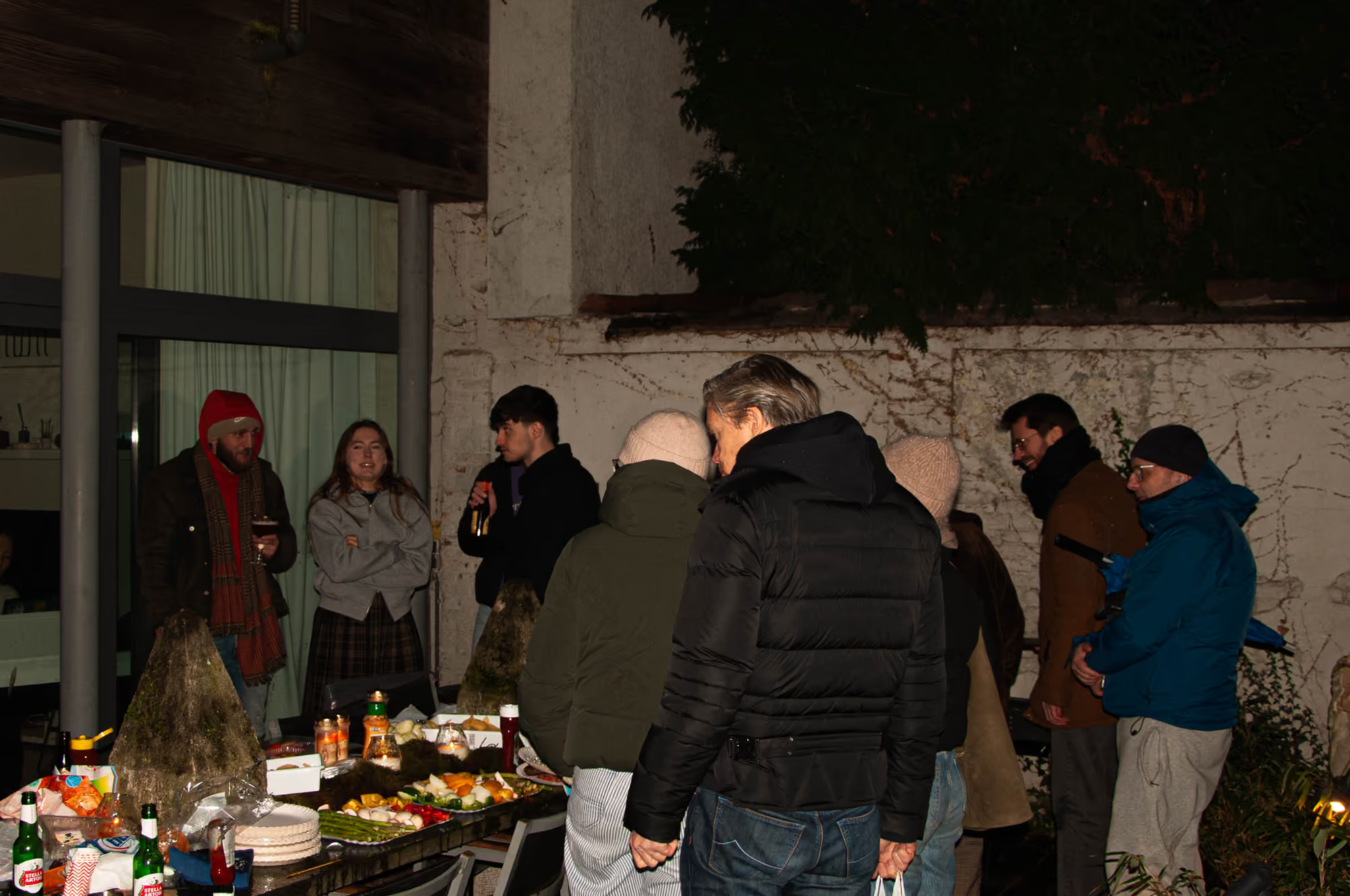
Behind the calendar sits a short list of themes: creative, games, trips, wellness, cultural, movement, night fun. We check the balance every month, so the programme never drifts into only drinks. Over two years it has followed the seasons: a barbecue at Garden House in the cold of January, a paella to see off winter in March, padel in the spring, a beach weekend in June.
We wrote earlier that a third place is somewhere you belong without obligation, the café where the regulars know you. An event is its scheduled cousin. For one evening the house becomes that place; if the evening recurs, it becomes a habit.
In March 2025 we said goodbye to winter with a paella at Garden House. Between ten and twenty people came, from different houses. One resident wrote afterwards that food brings people together.
The research agrees. Robin Dunbar's study of social eating, drawn from a survey of two thousand adults in the UK, found that nearly 70% of people had never shared a meal with a neighbour. It also found that those who eat socially more often feel happier, trust other people more and have more friends they can rely on. What left diners feeling closer was, above all, laughter and reminiscing.
It is a survey, not an experiment, so the causation is argued rather than proven; Dunbar's own analysis simply leans the way you would hope, from eating together to feeling bonded.
One resident called the Cultural Exchange in May 2025 amazing, and one of the best events. Everyone brought a dish from the country they come from. People ended up dancing and singing, and a few carried the night on to a club. Nobody had to be introduced; the food did it, one "what is this?" at a time.
In our own feedback, cooking together came out on top, with tastings another favourite. Both give a stranger something to hold, and a reason to say "try this".
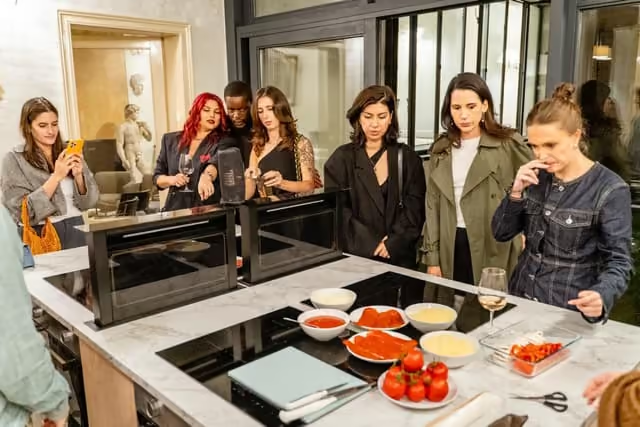
In our experience, the events that connect people fastest are small, built around a shared task and finished at a table. Ten people, two teams, a puzzle and a drink afterwards give everyone something to do and someone to do it with.
The escape room in March 2025 is the example we keep returning to: ten of us, two teams, one locked room, drinks after. A resident's note was short. Because of the escape room, people really connected.
Psychology offers a reason. In a 2014 paper, Boothby and colleagues found that sharing an experience with another person amplifies it, even when the two never speak. In the silent disco experiments, strangers danced in time with each other, each through their own headphones, and came out feeling closer. A puzzle solved by two teams is the same mechanism in a smaller room: everyone attending to the same thing at the same moment.
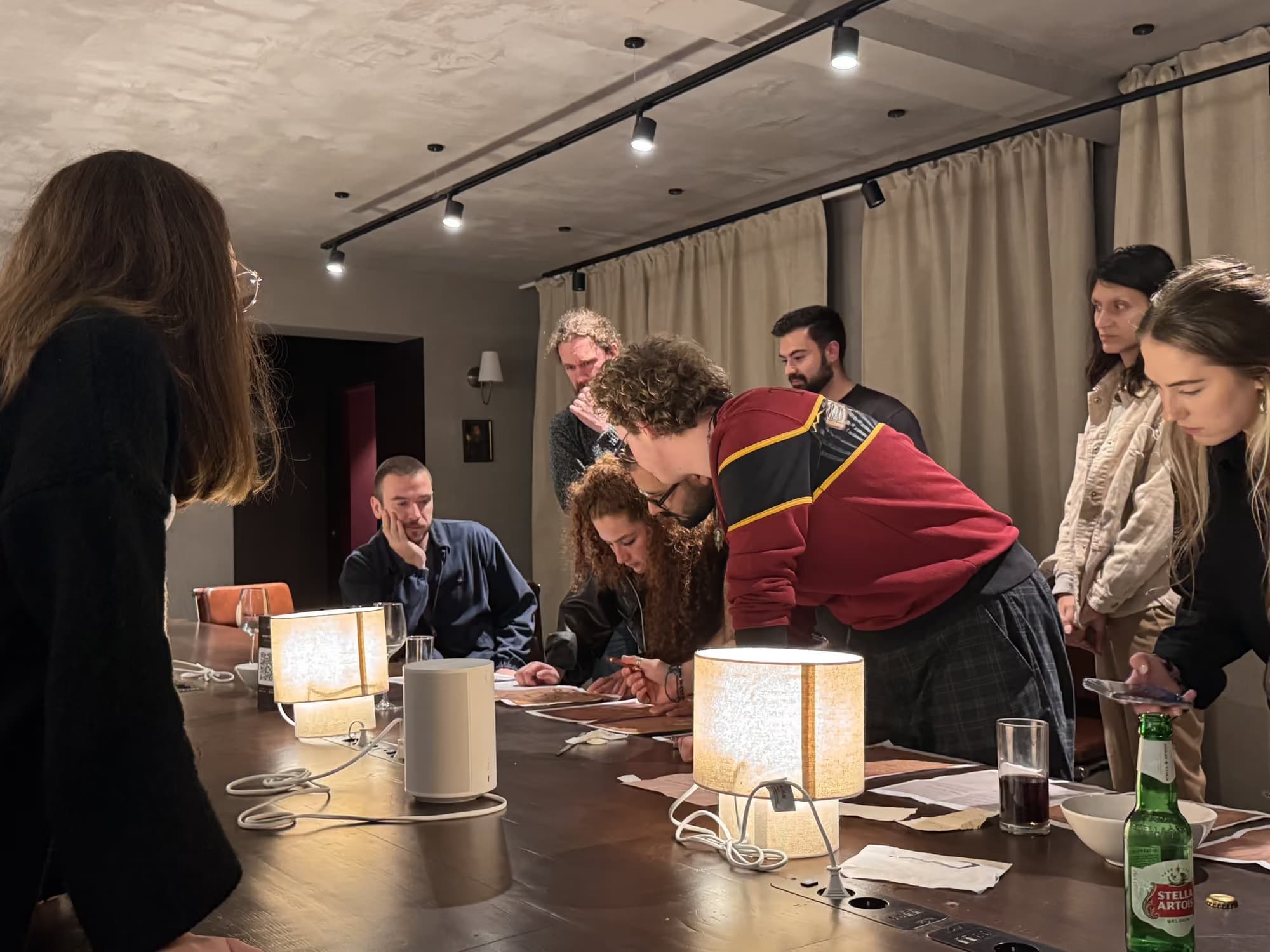
The Murder Mystery in September worked the same way. Twenty-five people signed up and twenty-one came, each with a character, a name tag and a reason to approach someone they would otherwise never have spoken to. A quieter version ran in the Work of Co garden in August: eight people on yoga mats for pilates and yoga nidra, moved indoors by the rain, with an organiser who asked to come back. Federica Terra put the difference well in a Google review:
"They were not the typical meet and greet, but they put attention into detail and create a nice atmosphere where you could feel comfortable and interact with other tenants."
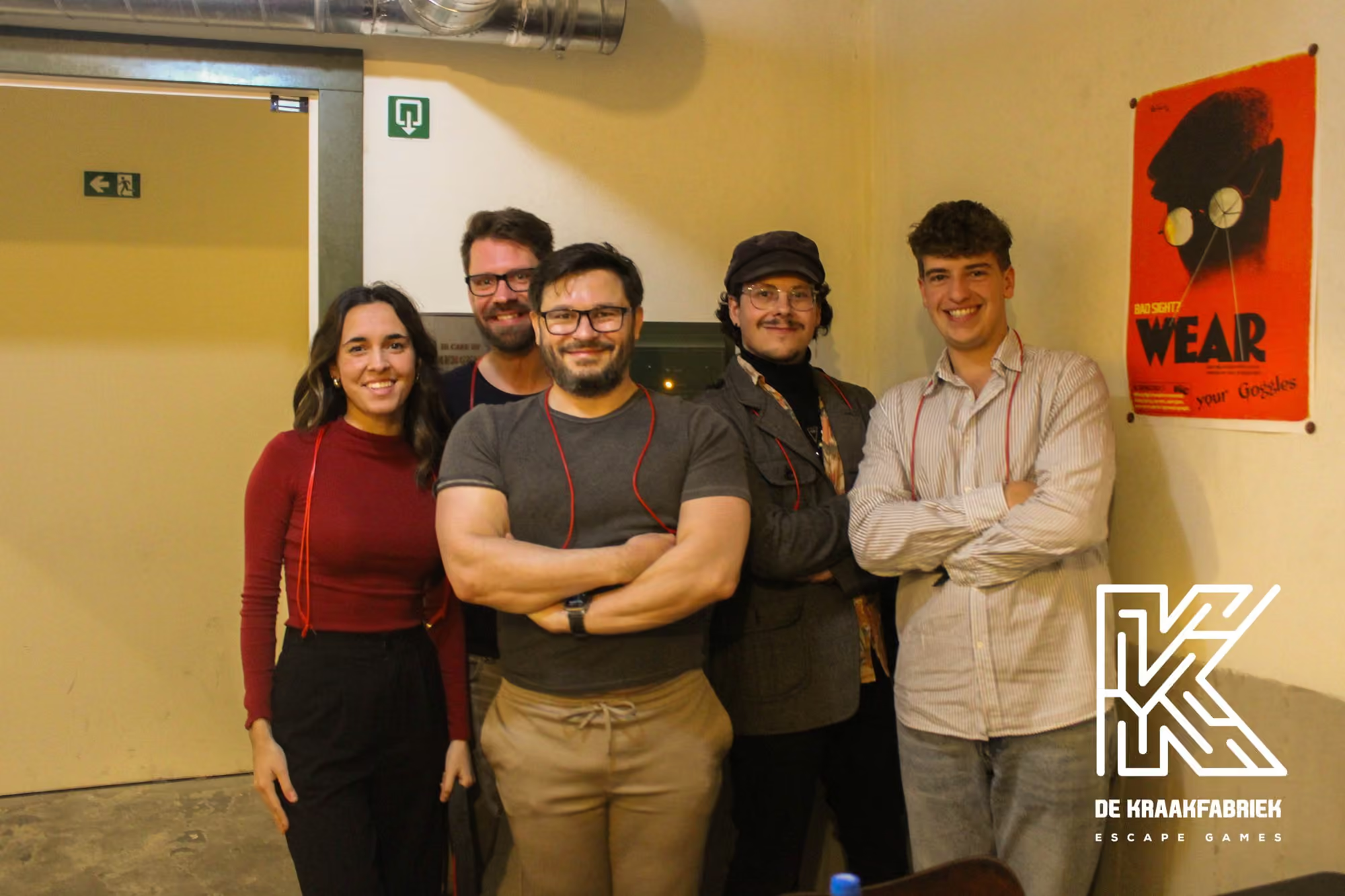
Community living across thirteen houses only works when residents can meet outside their own front door. Every event brief we write names the same aim: mix people from different houses, so a friendship that starts on one street can carry on at another. A city festival, a weekend away and a table in a shared garden all serve it.
Bollekesfeest is the clearest example. Each August the city gives the Grote Markt and Groenplaats over to free concerts; 200,000 people came this year, according to the organisers. On 22 August a group of us went together. Most came from Damco, where the house manager did the persuading; a few came from Garden House.
Under "what went well" we wrote that people enjoyed each other's company. Under "what to improve" we wrote that we want more houses next time.
The bigger trips do the same thing at greater length. In June twenty-one of us, residents and team, spent a weekend in the Ardennes near Aubel; the year before it was a beach weekend. Going away removes the one thing that keeps houses apart, which is the walk between them.
Houses still keep their own character; our post on Life at Seef Yard describes one of them, down to its pond and its two stone lions. The aim is not to blur that. It is to make sure that someone from the Garden House garden knows someone from Damco's kitchen.
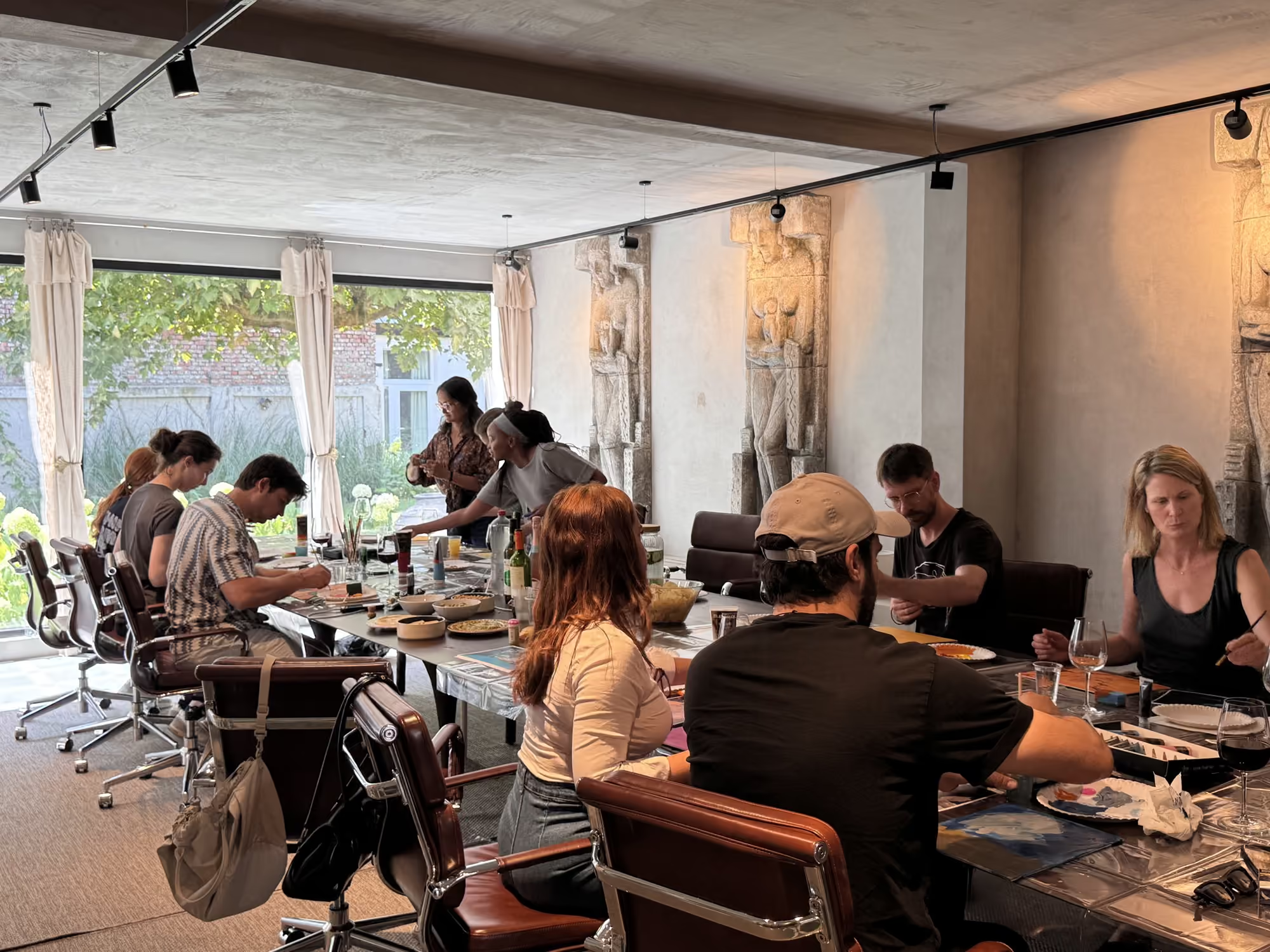
What we changed since 2025 is small and practical: we say when the food is actually served, send each event its own reminder, confirm every booking two weeks ahead, and keep an alcohol-free option on the table. None of it is glamorous. All of it came from a real evening.
At the Bye Bye Winter paella the invitation said noon and lunch arrived closer to three. Now we say when the food is served.
A resident asked for a separate message ahead of each event, rather than the monthly calendar alone; now each one gets its own. At a beer tasting in Dodoens, two people drank only the alcohol-free beers and told us how much it mattered. And we confirm bookings at least fourteen days ahead, because a locked door is a poor way to begin an evening.
Mostly, residents told us they wanted conversation: something cosy and real, not a night built around drinking. Plans also bend with weather and budget, and some briefs never become evenings. That is fine. The point of the calendar is the rhythm, not any single night.
Three things have held across two years of events. Community arrives through repetition rather than one good night. The evenings that work are small, built around a shared task, and end at a table. And a house becomes part of a wider community only when its residents have reasons to leave it, together.
You can test any coliving on those terms: ask to see last month's calendar, ask who ran each event, ask how many houses came. Our look at the rise of coliving asked what a generation that moves often wants from a home. Part of the answer, we think, is a calendar.
If you are new to the city and wondering where your people are, find your people at HOC. One resident, Azamat, wrote that they "especially loved the events and the community of young, inspiring people." And if you already know which house is yours, book a room with HOC; there is a seat at the next table.
A house gives you neighbours. A calendar, kept long enough, gives you friends.
What is community living in Antwerp?
Community living means sharing a home with other people and a social life with them: meals, events, and a network that reaches beyond your own corridor. In Antwerp, HOC runs thirteen houses with flexible contracts from three months and a calendar of events that brings residents of different houses together.
What events does HOC organise for residents?
Two events a month form the backbone of the calendar, spread across creative, games, trips, wellness, cultural, movement and night-out themes. Recent examples include paint and wine, a pilates and yoga nidra morning, a murder mystery night, an evening at Bollekesfeest and an annual weekend in the Ardennes.
Are the events mandatory or paid?
No event is mandatory. Most are free for residents or funded by HOC, and a few trips ask for a contribution towards tickets or activities. Details for each event are shared in the residents' WhatsApp events channel before it runs.
What if I'm introverted, or I don't drink?
Most events are small, usually between ten and twenty people, and built around an activity, so you are never standing in a room waiting to be talked to. Wellness mornings, board games and painting sessions sit alongside the nights out, and an alcohol-free option is part of the plan for evening events. New tenants also receive a personal invitation, so a first event doesn't have to be faced alone.
How do I meet people in Antwerp if I'm new to the city?
Start with the people closest to you, then widen the circle on purpose: say yes to the first event, then the second. Research on social eating links regular shared meals with having more friends to rely on, and a house that schedules them makes the habit easy. At HOC you can join events across houses from your first week.
Next article
For the HOC Living community, coliving in Antwerp is also about getting to know the city one cup at a time. Over the past twenty years, Antwerp has learned to drink coffee with more attention. What started with one distinctive coffee bar on Hopland grew into a city of roasters, baristas and places where an espresso, filter coffee or cortado is discussed as naturally as a good glass of wine. For expats and curious locals alike, that is wonderful news: today, Antwerp can also be discovered one cup at a time.
Continue reading