Let's talk about Antwerp and it's history. It's an amazing story!
In this article
Anyone who experiences coliving with HOC Living soon discovers that Antwerp is much more than handsome façades and convenient cycling routes. It is a city that has attracted people for centuries: traders, adventurers, artists, fortune-seekers and, let’s be honest, people with rather less respectable plans too. Our community is part of a long Antwerp tradition: living together in a place where the world has always arrived via the River Scheldt.
Antwerp did not begin with the Meir, a sunny terrace in the South or a perfectly poured pint. It began much more modestly, on a sandy ridge beside the Scheldt. Dry enough to live on, and close enough to trade from: as foundations go, that proved to be an excellent combination.
Long before Antwerp became a city, small settlements lined the Scheldt. The name Andoverpis is said to mean something like “land thrown up by the river”: soil deposited by the Scheldt itself. In other words, the river helped build the city — without a contractor, a permit or an endlessly delayed construction site.
The location was ideal. Antwerp stood at the crossroads of waterways and land routes, between the Campine region, the Waasland and Brabant. Traders, craftspeople and travellers arrived from far and wide. Frisians, Danes and people from inland communities all crossed paths here. Antwerp was, from the start, a place where languages, customs and stories met — which may sound rather familiar to anyone living in an international HOC house today.
As Antwerp grew, it acquired something every self-respecting medieval city needed: walls. The first fortifications appeared in the twelfth and thirteenth centuries. They were not only there to impress visitors, but mainly to keep unwelcome visitors out.
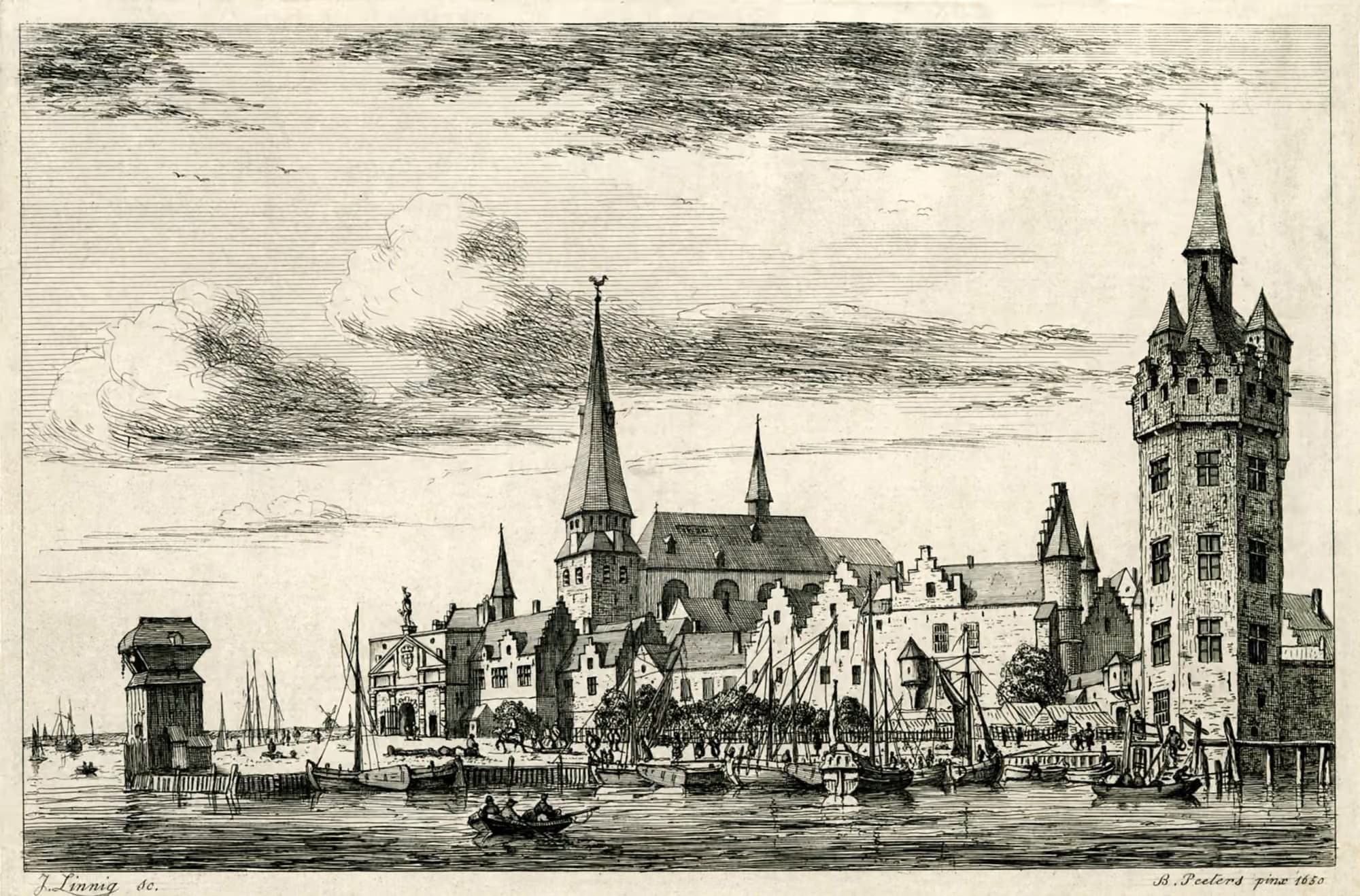
Within those walls, life quickly became more vibrant. There were markets, crafts, churches, fish and meat sellers, warehouses and wooden quays along the river. Around Het Steen was a busy wharf where ships loaded and unloaded. The port was not yet a vast landscape of docks and containers, but a lively edge of the city where goods, rumours and people were constantly arriving and leaving.
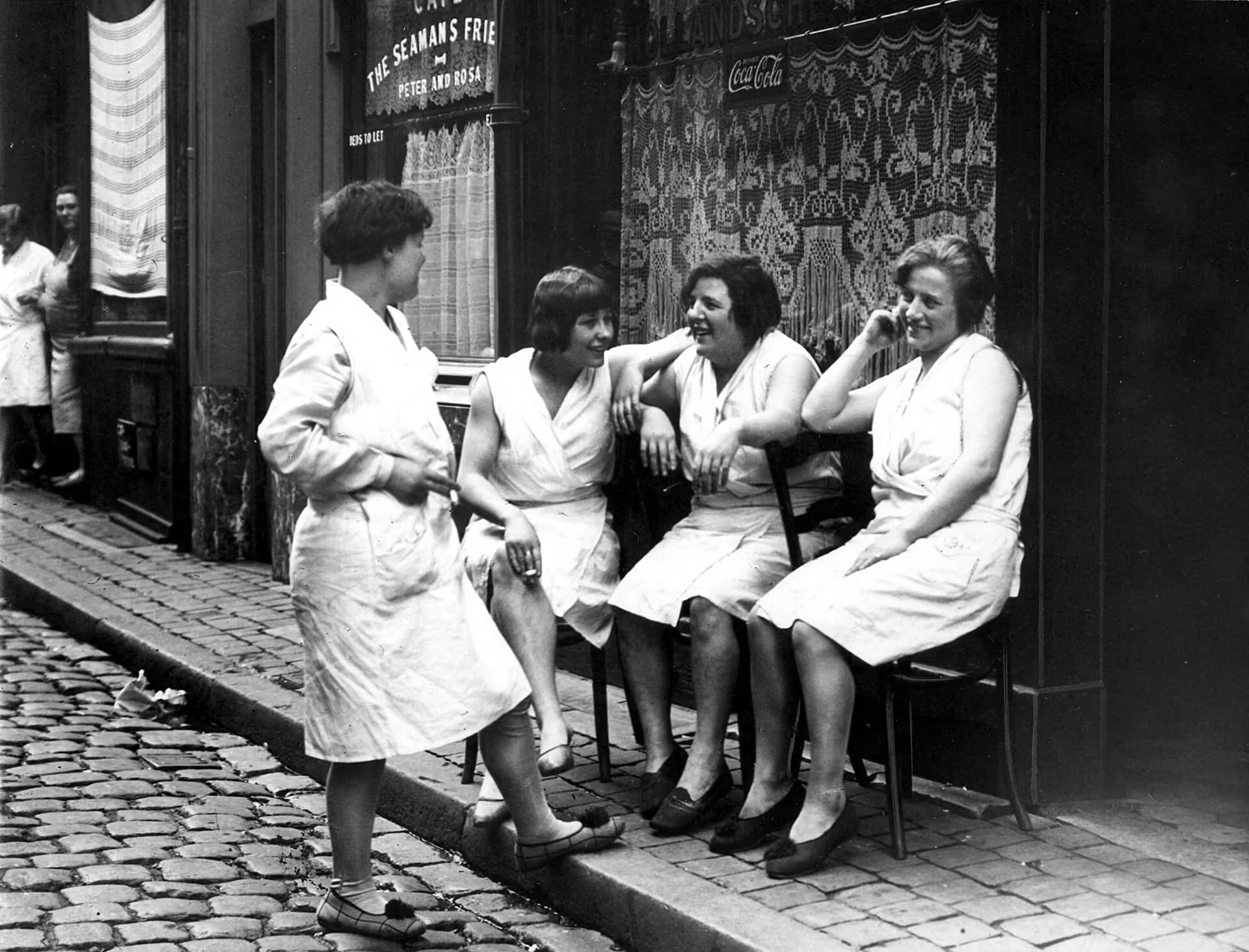
And wherever there is a port, there is usually some nightlife too. Prostitution was already a visible part of life in the growing medieval city. By around 1300, there were even initiatives to offer women a way out if they wished to leave it behind. Antwerp was, even then, a city of commerce and compassion — with all the contradictions that come with both.
From the late thirteenth century onwards, the Brabant fairs brought increasing international trade to Antwerp. By the fifteenth century, the city had become a true European magnet. English wool, German metals and Portuguese spices: anyone wishing to buy, sell, exchange or discover had good reason to come to Antwerp.
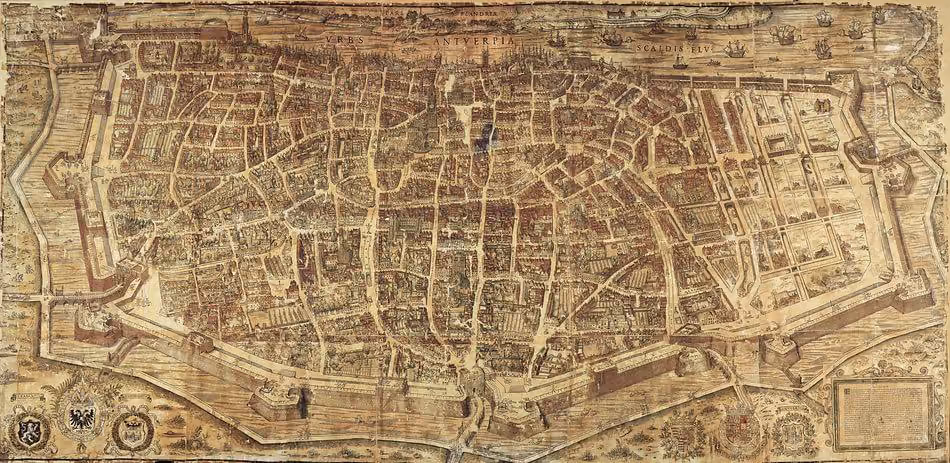
The sixteenth century took things to another level entirely. In a relatively short period, the population grew from around 40,000 to 120,000 residents. For that time, it was enormous — a little as if all of Belgium had suddenly decided to move to Antwerp in a single weekend, only without a WhatsApp group for practical arrangements.
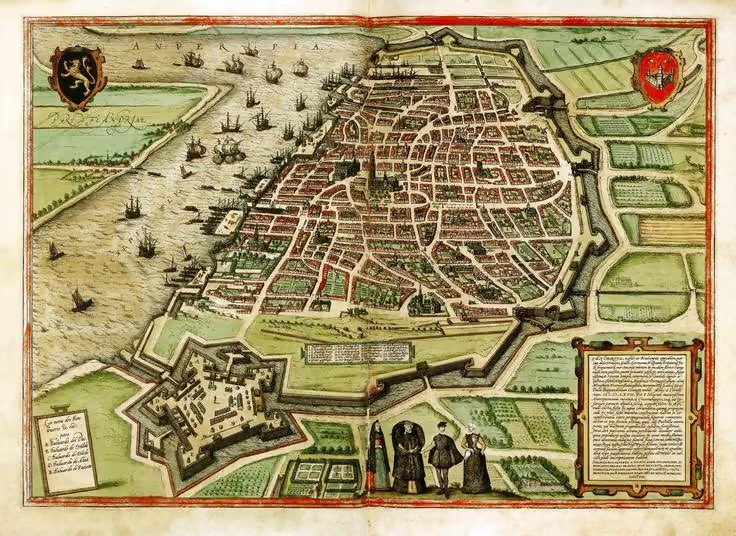
That growth required bigger plans. After an attack on the city in 1542, Emperor Charles V ordered the construction of an imposing new defence system: the Spanish Walls. It was state-of-the-art sixteenth-century urban security, complete with bastions, gates and wide areas where building was forbidden. Today, much of that old route can still be traced along the Leien. Antwerp, it seems, keeps its history beneath the asphalt.
Antwerp has known golden ages, difficult times, wars, economic decline and, time after time, a new beginning. The port gradually moved northwards, Napoleon had the Bonapartedok and Willemdok dug on Het Eilandje, and the city continued to grow, build and reinvent itself.
Perhaps that is exactly what makes Antwerp so appealing. The city is never entirely finished — thankfully. Old warehouses become places to live and work, historic houses welcome new residents, and people from every corner of the world make a home here together.
At HOC Living, we are doing something wonderfully Antwerp: living together in a city that has welcomed, surprised and gently shaken up newcomers for centuries. Only the walls are a little less necessary now. A good front door, a warm community and perhaps a shared coffee usually do the job just fine.
Next article
Some houses sit deep in the Seefhoek, one of Antwerp's oldest working-class neighborhoods; some open onto a private garden; one occupies a converted nineteenth-century building nine minutes from the city's museum quarter. The honest answer to "which one is right for me" depends less on marketing copy than on how you actually want your week to go: noisy or quiet, central or leafy, a room or a full apartment, budget-conscious or willing to spend a little more for the address.
Continue reading