HOC runs 13 coliving houses across Antwerp, and no two solve the same version of "where should I live." Some sit deep in the Seefhoek, one of the city's oldest working-class neighborhoods; some open onto a private garden; one occupies a converted nineteenth-century building near Antwerp Zuid's museum quarter. This guide sorts them by what actually varies — neighborhood, price, and room versus apartment — so you can pick the one that fits your week, not just the first listing you saw.
In dit artikel
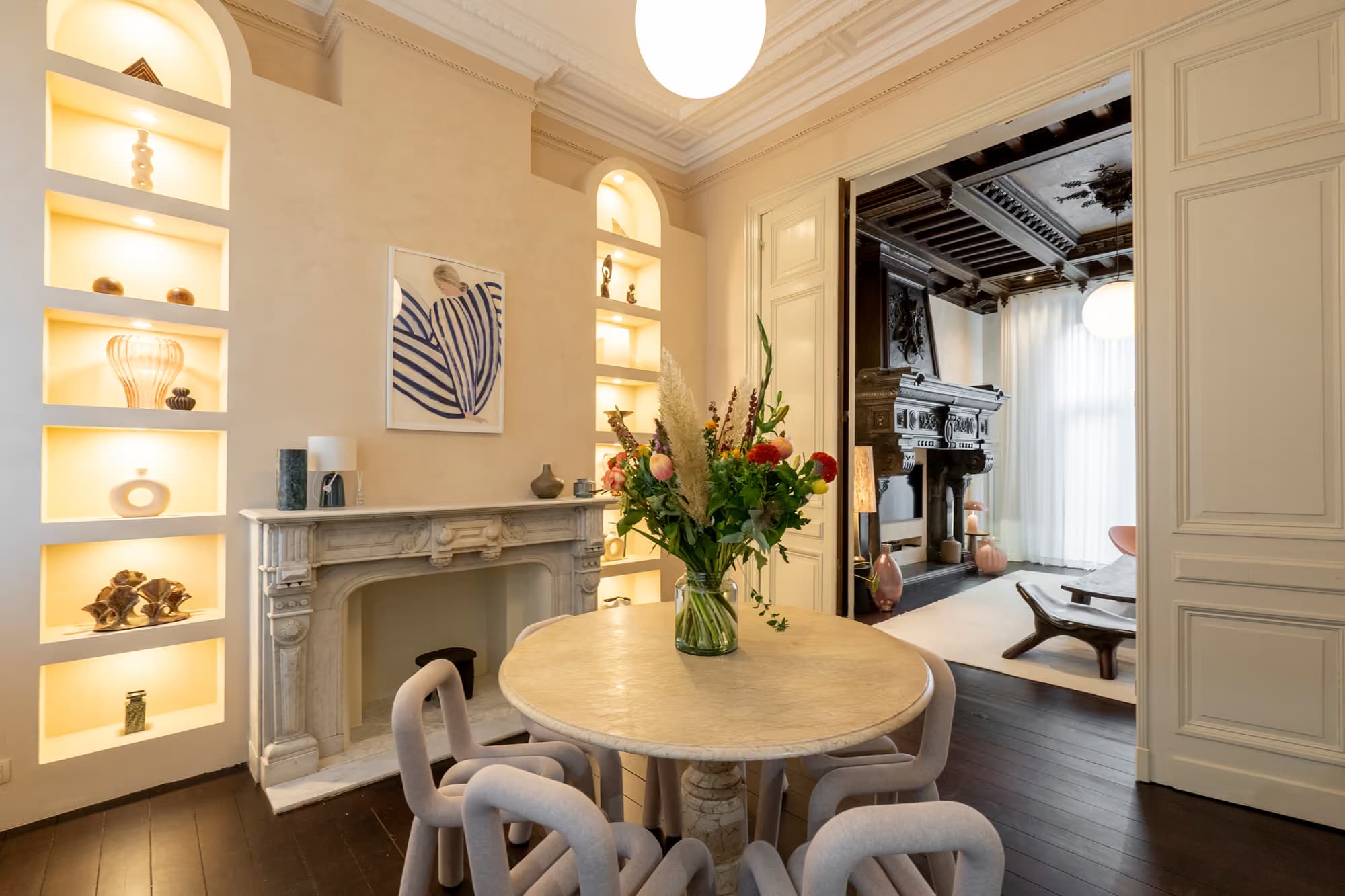
Coliving Antwerp isn't one front door anymore — HOC alone runs thirteen fully furnished coliving spaces, each with all-inclusive pricing and a flexible lease starting from three months. They're scattered across a city that changes character block by block. Choosing between them, whether you're a young professional, a digital nomad, or an expat new to the city, is a small stack of decisions in disguise: which neighborhood, how much quiet, a private room or a full apartment, a shared house or a self-contained studio — the same trade-offs behind every one of the coliving apartments in Antwerp worth comparing.
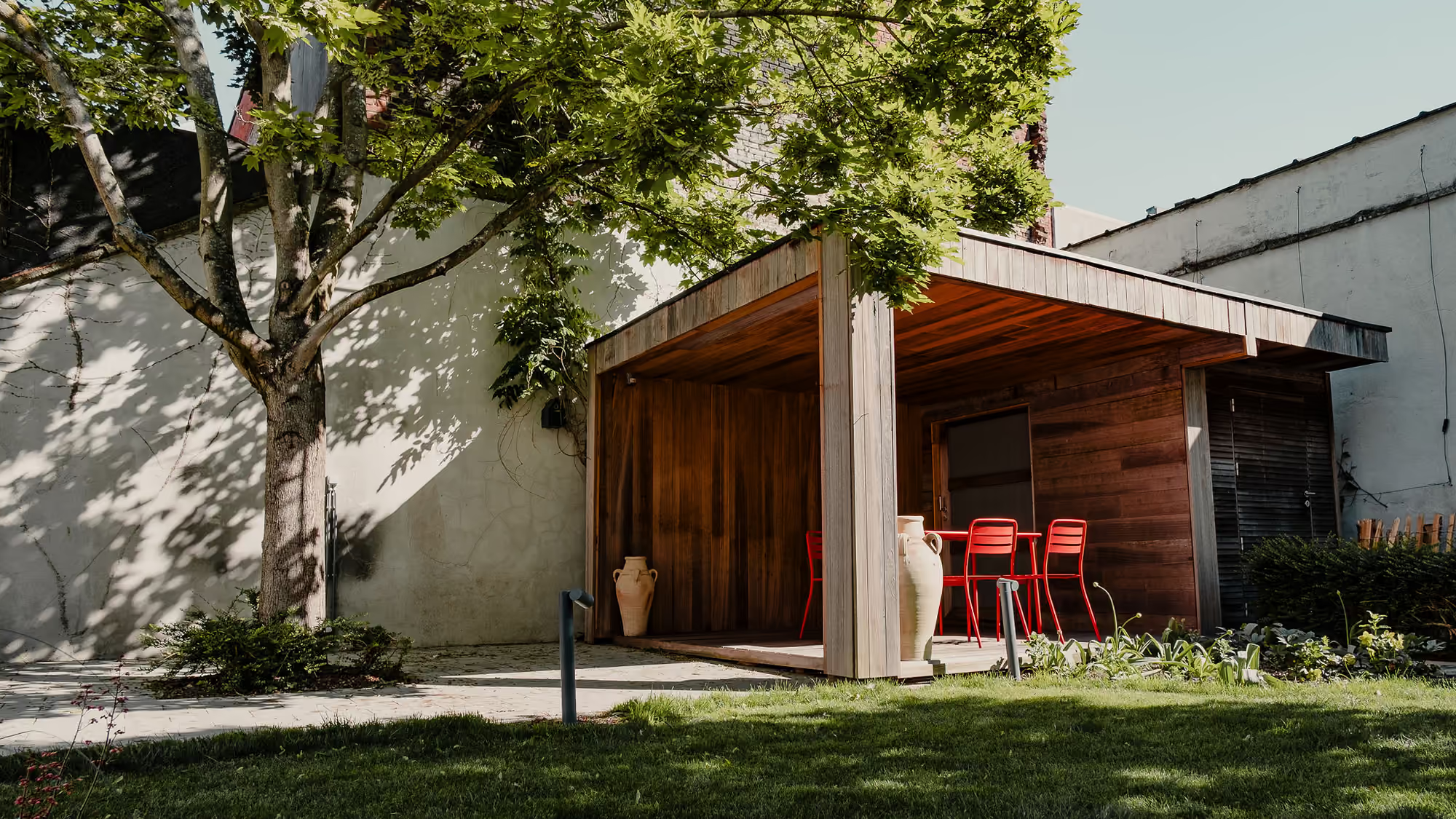
Some houses sit deep in the Seefhoek, one of Antwerp's oldest working-class neighborhoods; some open onto a private garden; one occupies a converted nineteenth-century building nine minutes from the city's museum quarter. The honest answer to "which one is right for me" depends less on marketing copy than on how you actually want your week to go: noisy or quiet, central or leafy, a room or a full apartment, budget-conscious or willing to spend a little more for the address.
This is a practical guide, not a brochure. Every HOC house shares the same backbone: all-inclusive pricing, flexible contracts from three months, weekly cleaning, a running calendar of community events. What's left to compare is the part that's actually yours to choose.
Every HOC house runs on the same operating system. All-inclusive rent, so there's no separate scramble for internet, utilities, or a cleaner. Contracts starting at three months, built for people whose lives are genuinely in motion rather than committed to a five-year lease. Weekly cleaning of the shared spaces. Technical support when something breaks. And a calendar of community events — a welcome dinner, a Sunday-morning espresso made by whichever housemate happens to be good at it, a monthly cooking night — that exists whether or not you're the kind of person who goes looking for it.
What changes is everything else. Thirteen houses means thirteen streets, thirteen sets of neighbors, thirteen different answers to "what's actually within walking distance." It means room sizes and layouts that range from a shared house with a communal kitchen to a self-contained apartment. It means monthly rent that spans roughly €500 to €1,200, depending on the house, the room, and whether you're renting a room or an entire flat.
Volgend artikel
Bij HOC Living geloven we dat coliving in Antwerpen meer is dan alleen een dak boven je hoofd: het is een gemeenschap die samen de stad ontdekt, onder andere via kunst. Daarom delen we de tip van deze maand met de HOC Living-gemeenschap: ‘An Apple for the Road’, de nieuwe solotentoonstelling van Ben Sledsens in de Tim Van Laere Gallery, om de hoek van onze colivinglocaties in Antwerpen.
Verder lezenNone of that variation is arbitrary: it roughly maps onto three questions — which neighborhood, how much space, how much you want to spend — and the rest of this guide is organized around exactly those, plus one house type that solves an unusual combination of all three. For the fuller list of what HOC includes by default, 8 Reasons why you will love staying with us covers the shared backbone in more detail than we will here.
Six of HOC's houses — SEEF, Rooster, The Garden House, Franciscus Quarters, Nest, and DAMCO — sit in or along the edge of the Seefhoek, Antwerp's most concentrated coliving cluster: a former working-class district, walkable to the center, with the everyday density of cafés, bakeries, and a Sunday market that makes a neighborhood feel used rather than staged.
The name gives away the history. "Seefhoek" comes from a tavern that once stood on the corner of the Lange Beeldekensstraat and the Pesthofstraat, where a beer called Seefbier — reputedly so reliable it shares a root with the English word "safe" — was poured by the glass.
The neighborhood grew up around that corner from roughly 1860 onward, during the same industrial wave that filled it with workers, and later migrants, drawn by the nearby port and rail lines. That layered, working history is still legible in the streets: it's not a district built for tourists, which is close to what Azamat Khaydaraliev meant when he described his stay — "HOC isn't just a place to live — it's a whole vibe. The spaces are beautifully designed, super clean, and feel like home from day one." The compliment isn't really about the paint job; it's about a place that reads as lived-in rather than staged.
If proximity to that energy is the whole point, Life at Seef Yard is worth reading before you choose a room, a portrait of what a day inside this cluster actually feels like.
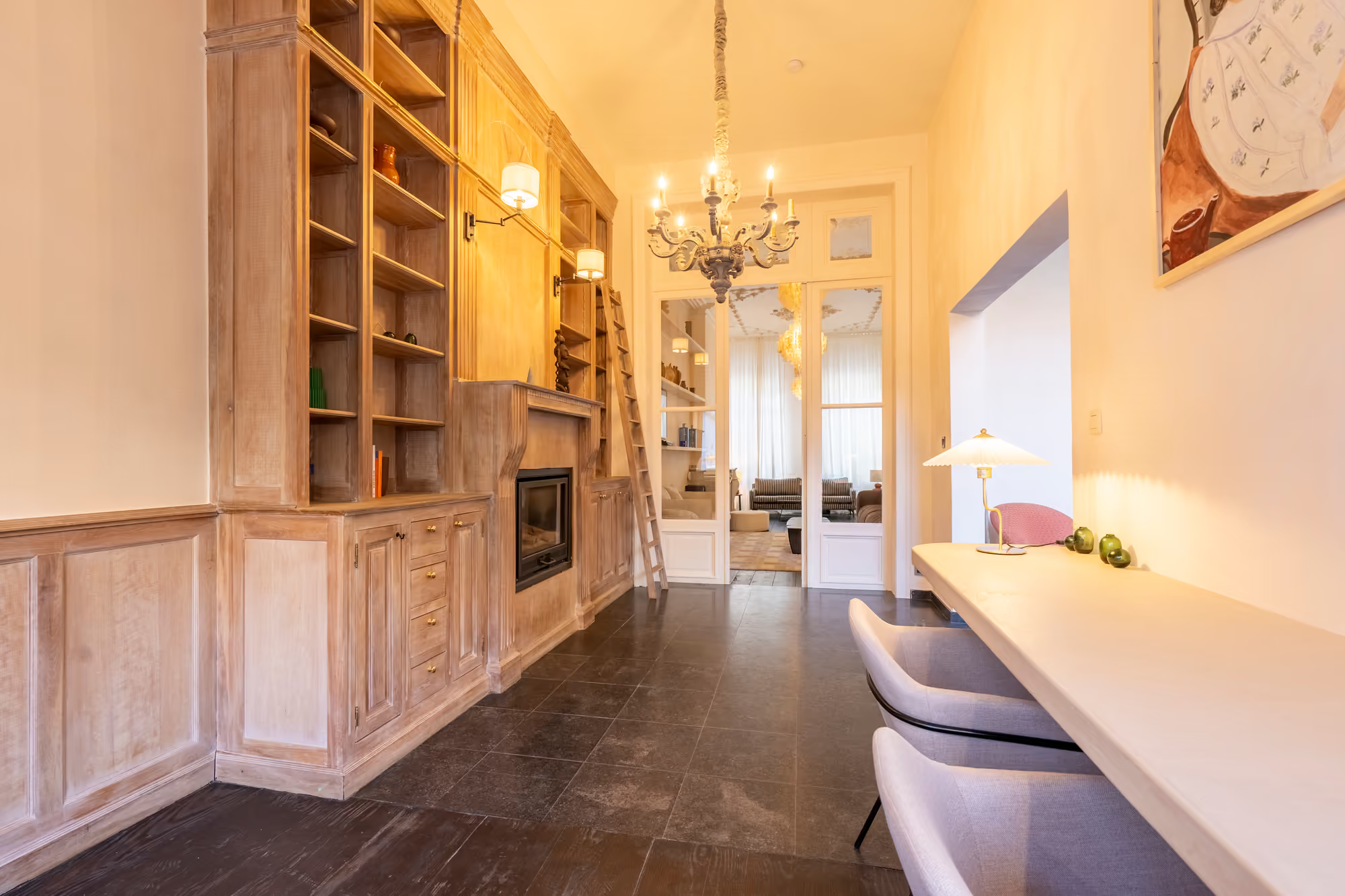
Not every HOC house wants to be in the middle of things. The Garden House earns its name plainly: a private garden anchors the building, the kind of outdoor space that turns a Tuesday morning coffee into something worth getting up early for. Anna She, who stayed there, put it simply: "Lovely place with a cozy garden, small pool perfect in summer", the small pool detail matters, because it's the kind of specific, checkable thing a listing photo can't fake.
A short distance away, in Borgerhout, sits Dodoens: named after Rembert Dodoens, the sixteenth-century Mechelen-born physician and botanist sometimes called the father of botany for Cruydboeck, his 1554 herbal that went on to be translated more widely than almost any book of its era besides the Bible. It's a fitting namesake for a house built around slower, greener mornings rather than proximity to nightlife. Between the two, the choice isn't really about whose garden is bigger: it's about whether you want that quiet a five-minute walk from the Seefhoek's noise, or embedded a little further into Borgerhout's own, calmer rhythm.
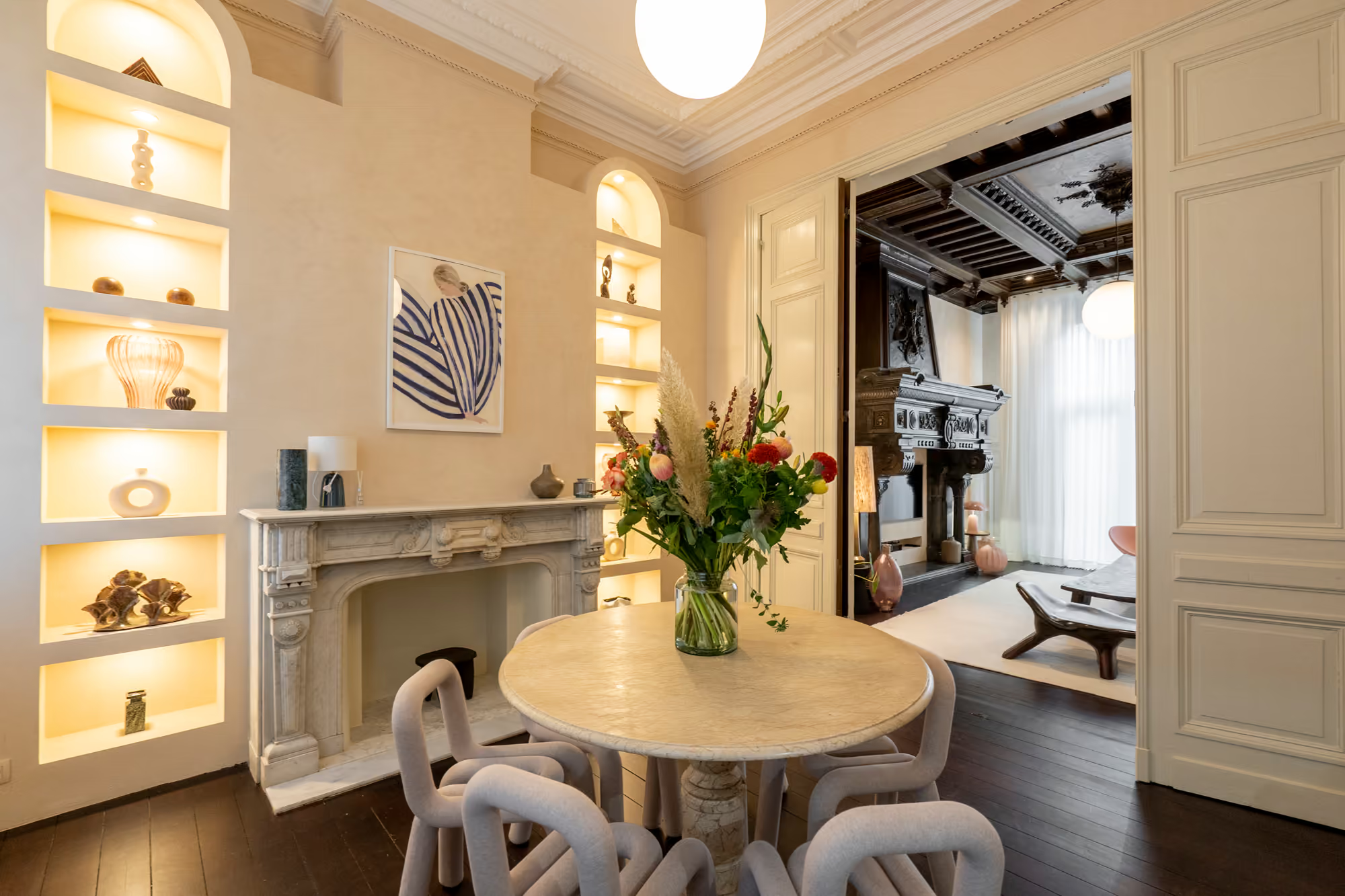
La Maison du Gard and DAMCO are HOC's most affordable houses, with rooms starting around €500 and €650 a month. Both keep the full HOC backbone; all-inclusive pricing, weekly cleaning, community events, proving that the cheapest option isn't a stripped-down one, just a smaller room in a different building.
The gap between HOC's cheapest and most expensive rooms is real — roughly €500 to €1,200 a month — but it isn't a gap in what's included, only in size and address. La Maison du Gard, on the Halenstraat, is the more central of the two budget options; DAMCO, on the Dambruggestraat, is HOC's newer house and sits closer to Antwerp's northern edge, an easy cycle from the center rather than a walk from it. Neither asks you to trade away the cleaning schedule or the events calendar to hit a lower number: the savings come from room size and location, not from the parts of coliving that are actually hard to arrange for yourself.
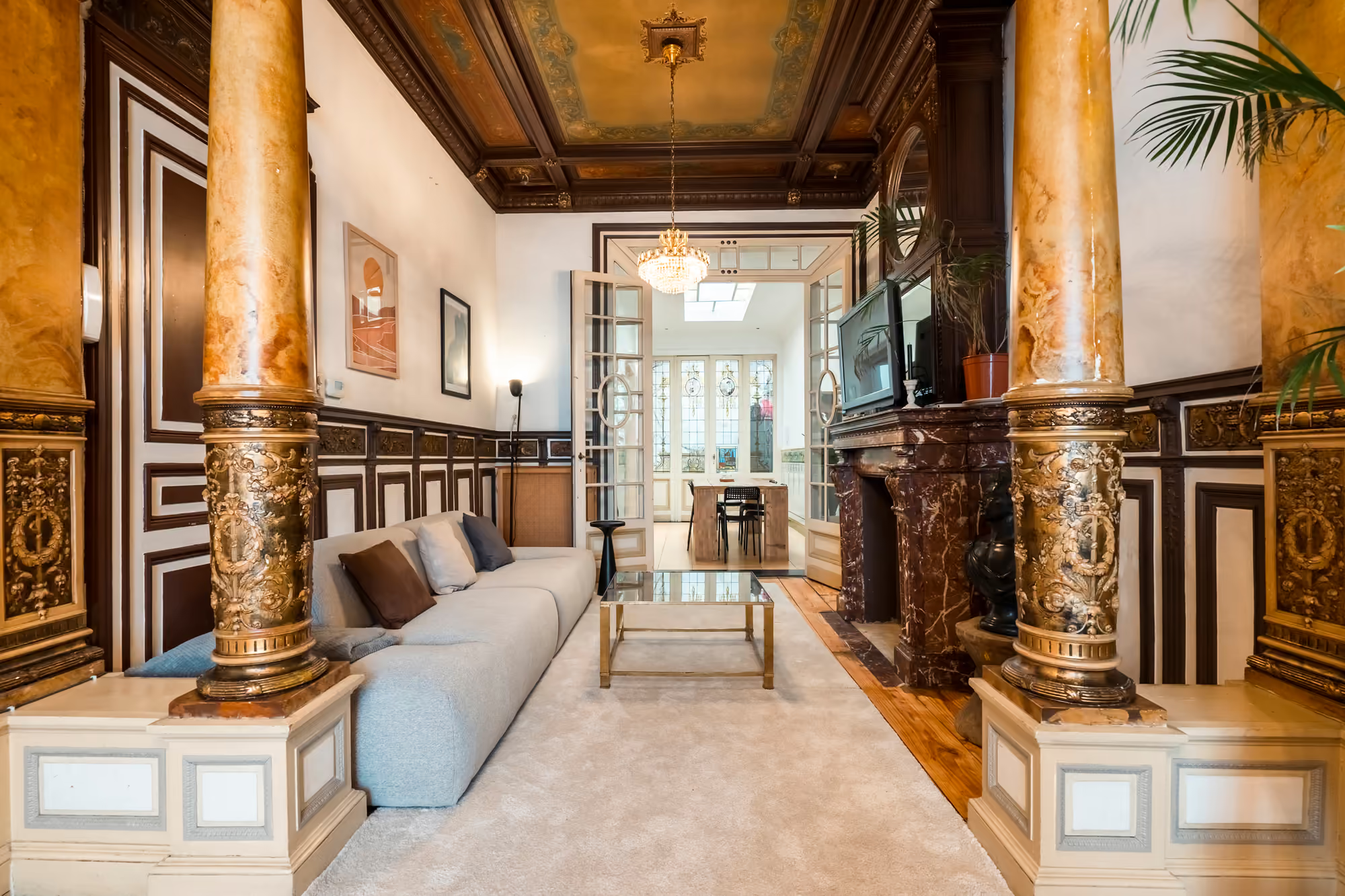
The Library House sits in Antwerp Zuid, the city's museum and gallery district, a short walk from the Scheldt quays and the Royal Museum of Fine Arts. It suits residents who want gallery openings and riverside runs within reach more than they want to be in the thick of the Seefhoek's density.
Zuid runs at a different rhythm than the Seefhoek entirely — fewer corner cafés with a century of regulars, more converted warehouses and gallery fronts. The Royal Museum of Fine Arts Antwerp, a neoclassical building finished in 1894 and still one of the district's defining landmarks, anchors the neighborhood the way a cathedral anchors an older one: it gives the area a center of gravity, and everything nearby, including The Library House on the Miraeusstraat, inherits a little of that calm, curated feeling. If your ideal Sunday involves a gallery and a walk along the water rather than a house party two doors down, this is the cluster that matches it.
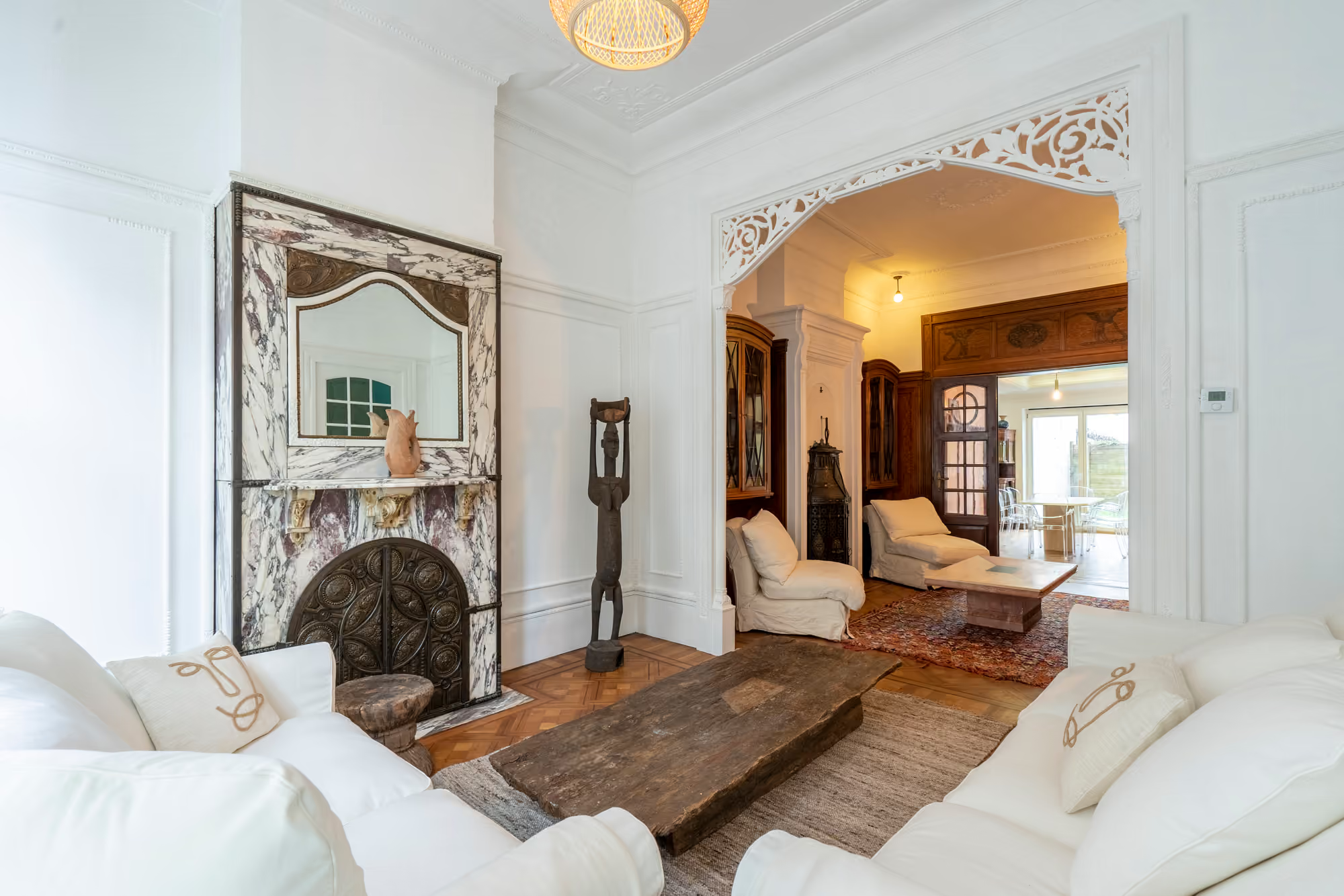
Old Brick offers studios — a private room with its own kitchen and bathroom, inside a shared coliving house — while SEEF goes a step further with fully self-contained apartments. Rooster and Franciscus Quarters split the difference: both let you choose, within the same building, between a single room and a full apartment.
The Old Brick occupies a converted historic building on the Oudesteenweg: twelve studios built around the same shared spaces and events calendar as any other HOC house, for residents who want their own kitchen and bathroom without giving up the built-in social life. SEEF, in the Seefhoek cluster, is the fuller version of that same idea — a complete apartment, at a slightly higher price point. Rooster and Franciscus Quarters, also in the Seefhoek, don't force the choice at all: both offer either a single room or a full apartment under one roof, so it's possible to start in a room and move into an apartment later without switching neighborhoods. The distinction that actually matters isn't luxury versus basic — none of HOC's houses trade in that language — it's how much of your own kitchen and your own door you want, and whether you want to decide that now or later.
None of this — the street, the garden, the size of the room — is really the point. It's the frame the point sits inside. What actually makes a year in coliving feel worthwhile isn't the address on the lease; it's what happens inside the frame: the rituals that turn a building full of strangers into a household — a welcome dinner, a recurring cooking night, the small unplanned ten minutes in the kitchen that turns into an hour. Those happen at every HOC house, in the Seefhoek and in Borgerhout, in a shared room and in a private apartment.
So choose the neighborhood that matches your actual week. Choose the budget that won't make you resent the whole arrangement by month three. Choose the room or the apartment depending on how much door-closing you actually need. Trust that the rest — the part that's harder to shop for — is built the same way in all thirteen. That's really what house-hunting here comes down to: not finding the perfect building, but finding your people at HOC in whichever one fits the life you're already trying to live. Once you've narrowed it down, the next step is simple enough: book a room with HOC, and find out which version of that week is actually yours.
How many coliving houses does HOC run in Antwerp? HOC currently operates 13 coliving houses across Antwerp, ranging from shared rooms starting around €500 a month to full apartments near €1,200. Every house includes the same all-inclusive backbone — rent covering utilities and internet, weekly cleaning, and a running calendar of community events — so the differences between them come down to neighborhood, room type, and price rather than what's included.
What's the difference between HOC's Seefhoek houses and its other locations? Six HOC houses — SEEF, Rooster, The Garden House, Franciscus Quarters, Nest, and DAMCO — sit in or near the Seefhoek, a historic working-class neighborhood named after a tavern that once served Seefbier on the corner of the Lange Beeldekensstraat. Houses outside that cluster, like The Library House in Antwerp Zuid or Dodoens in Borgerhout, trade that density for a quieter or more gallery-oriented setting.
Which HOC house is the most affordable? La Maison du Gard, on the Halenstraat, is HOC's most affordable house, with rooms starting around €500 a month. DAMCO, HOC's newer house on the Dambruggestraat, is the next most affordable option, and both include the same all-inclusive pricing and community programming as HOC's more expensive houses.
Can I rent a full apartment instead of a room at HOC? Yes. SEEF offers fully self-contained apartments starting around €1,200 a month, Old Brick offers private studios with their own kitchen and bathroom from around €1,045, and Rooster and Franciscus Quarters let residents choose between a single room or a full apartment within the same building.
Do all HOC houses have the same contract terms? Yes: every HOC house offers flexible contracts starting at three months, regardless of neighborhood, room type, or price. That consistency is intentional — it's built for residents whose plans are genuinely in motion, rather than tied to a traditional long-term lease.